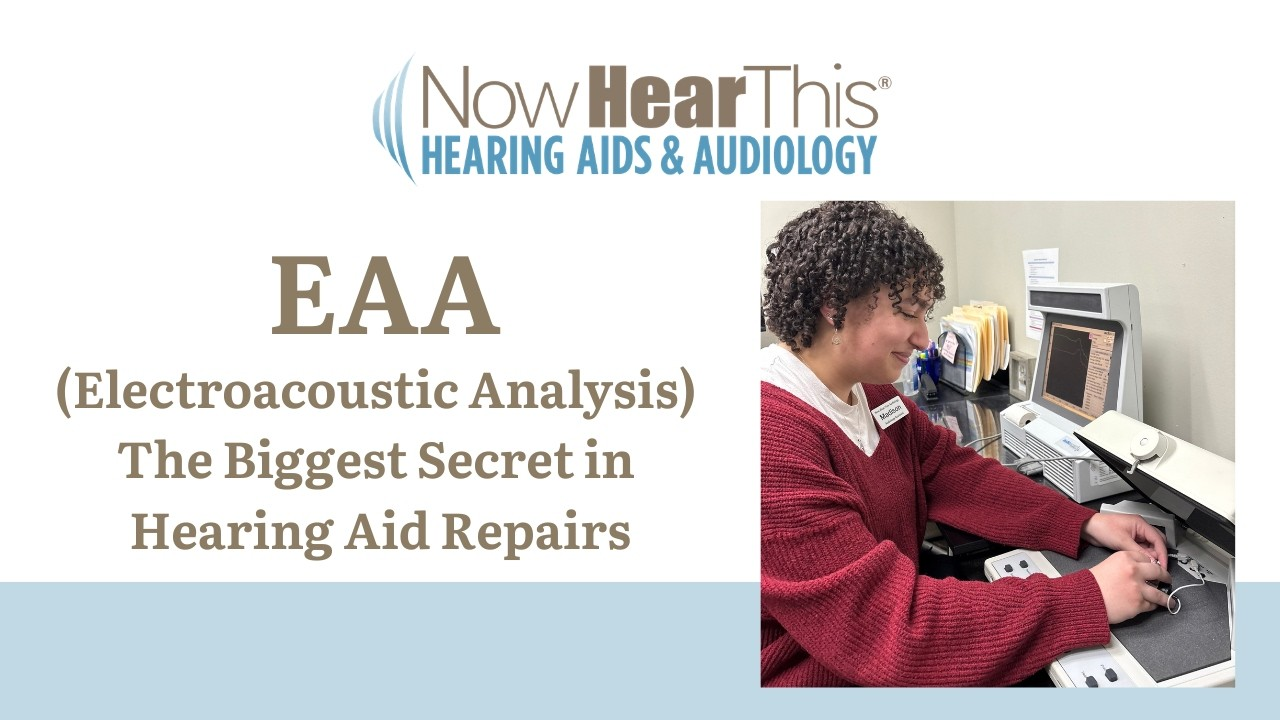
If your hearing aids have been producing static, distortion, weak sound, or just don’t seem quite right, you’re not alone. Many patients go through repeated adjustments and cleanings without real improvement. At Now Hear This® in Raleigh, we use a professional diagnostic tool that quickly gets to the root of the problem: Electroacoustic Analysis (EAA).
Hi, I’m Madison, an Audiology Assistant at Now Hear This®. Today I’m sharing one of the biggest secrets in hearing aid repair — and why it matters so much for patients.
What Is Electroacoustic Analysis (EAA)?
EAA is an objective, scientific test that measures exactly how a hearing aid is performing compared to the manufacturer’s specifications. Instead of guessing or trying multiple fixes over several visits, we can instantly see issues such as:
- Internal noise
- Distortion
- Reduced amplification
- Inconsistent sound output
This allows us to diagnose problems accurately and recommend the right solution the first time.
Why Most Clinics Don’t Offer EAA (And Why We Do)
Without EAA, troubleshooting often becomes a cycle of trial and error — cleaning, adjusting, and hoping for the best. That process can waste a patient’s time and money.
At Now Hear This®, we run EAA on every hearing aid that comes in for repair or troubleshooting. We even test devices again when they return from the manufacturer to make sure they’re truly fixed before giving them back to the patient.
How EAA Helps You
- Saves you time and money by identifying the real issue right away
- Reduces frustration from repeated visits that don’t solve the problem
- Gives you confidence that your hearing aids are performing at their best
If you’ve been struggling with ongoing hearing aid issues or unclear answers from other clinics, Electroacoustic Analysis may be the missing piece that finally gives you clear, reliable sound.
Ready to get your hearing aids checked properly? We’d love to help.
Schedule an appointment or learn more at: nowhearthisclinic.com
Have you ever experienced strange sounds or poor performance from your hearing aids? Drop a comment below — we’d love to hear your story.