Hearing Loss, Cognitive Decline and Dementia: What Is the Connection?
Hearing loss isn’t just about your ears. Your brain plays an incredibly important role in hearing, and growing research has found an association between hearing loss and cognitive decline.
For people experiencing hearing loss, understanding this connection may be another reason to take hearing health seriously and address hearing difficulties sooner rather than later.
How Does Hearing Work?
Hearing is actually a process that involves both the ears and the brain.
When sound enters your ear, it travels through the ear canal and past the eardrum before reaching the cochlea, a small, spiral-shaped organ in the inner ear.
Inside the cochlea, sound vibrations are converted into electrical signals. These signals travel along the auditory nerve, sometimes called the hearing nerve, to the brain.
Once the information reaches the brain, the brain has to interpret and decode those signals so that you can understand what you’re hearing.
In other words, your ears collect sound, but your brain makes sense of it.
What Happens When You Have Hearing Loss?
When someone has hearing loss, some of the sounds reaching the brain may be reduced or missing.
This can happen with mild, moderate, severe, or profound hearing loss.
As a result, the brain may have to work harder to fill in the gaps and determine what someone is saying—especially when there is background noise.
For example, you may hear someone speaking at a restaurant but struggle to understand their actual words. Your brain is essentially trying to piece together the missing information.
This increased listening effort can be mentally exhausting.
Hearing Loss and Cognitive Decline
Researchers have found an association between hearing loss and an increased risk of cognitive decline and dementia.
There are several theories about why these conditions may be connected. One possibility is that untreated hearing loss requires the brain to devote additional resources to understanding speech. Another consideration is that hearing loss can contribute to social withdrawal and reduced engagement with others.
It’s important to emphasize that hearing loss does not mean someone will develop dementia. The relationship is complex, and many factors—including age, genetics, overall health, and lifestyle—can influence cognitive health.
However, hearing loss is one factor that we can identify and address.
The “Use It or Lose It” Analogy
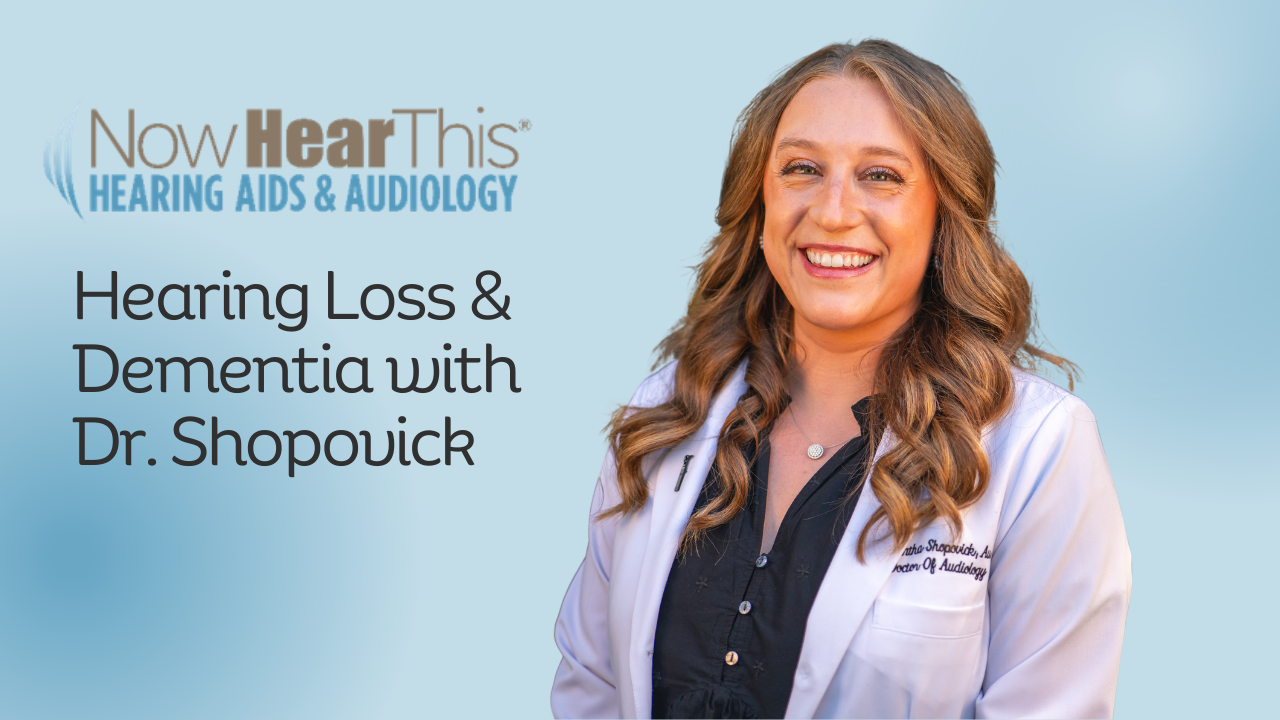
One way Dr. Shopovick explains this concept is with the phrase:
“If you don’t use it, you lose it.”
Think about what happens when you break your arm and don’t use the muscles for an extended period of time. Without movement and rehabilitation, those muscles can weaken and atrophy.
The auditory system is different and more complex, but the basic analogy helps explain why maintaining stimulation of the auditory pathway is important.
When hearing loss goes untreated, the brain may receive less auditory information than it previously did.
Can Hearing Aids Help?
Hearing aids are one of the most common treatment options for hearing loss.
Modern hearing aids are designed to make speech and other important sounds more accessible. By improving access to sound, hearing aids can help provide the brain with more of the auditory information it needs to process communication.
This is one reason why addressing hearing loss can be so important.
Hearing aids aren’t simply about making things louder. Properly fitted hearing aids are designed to provide appropriate amplification based on an individual’s hearing loss and listening needs.
A comprehensive hearing evaluation with an audiologist is the first step in determining whether hearing aids may be appropriate.
What Does the Research Say About Hearing Aids and Dementia?
Research has increasingly explored whether treating hearing loss may influence the risk of cognitive decline.
A well-known study from Johns Hopkins researchers found an association between hearing loss and increased dementia risk and also examined whether hearing aid use could modify that risk.
While research continues to evolve, these findings are encouraging because hearing loss is a potentially modifiable factor.
We cannot control our genetics or every aspect of aging. But if hearing loss is contributing to difficulty communicating and reduced access to sound, it is something we can identify and treat.
That makes hearing care an important part of an overall approach to healthy aging.
Don’t Wait Until Hearing Loss Becomes Severe
Many people wait years before getting their hearing evaluated because they believe their hearing loss isn’t “bad enough” yet.
But hearing loss doesn’t have to be severe before it deserves attention.
If you’re noticing that:
- People seem to mumble
- You have difficulty understanding speech in restaurants
- You struggle to follow group conversations
- You frequently ask people to repeat themselves
- You turn the television up louder than others prefer
- You feel exhausted after conversations
- You find yourself avoiding social situations because hearing is difficult
…it may be time for a hearing evaluation.
An audiologist can evaluate your hearing, determine the type and degree of hearing loss, and discuss appropriate treatment options.
Hearing Health Is Brain Health
Your hearing and your brain are closely connected. While treating hearing loss cannot guarantee that you will prevent cognitive decline or dementia, addressing hearing loss is an important step toward maintaining communication, social engagement, and access to the sounds around you.
If you’re experiencing hearing difficulties, don’t wait until hearing loss starts interfering with your daily life.
At Now Hear This® Audiology in Raleigh, our audiologists provide comprehensive hearing evaluations and personalized hearing solutions, including hearing aids and hearing aid programming and care.
📞 Call Now Hear This® Audiology at 919-256-2898 to schedule a hearing evaluation.
Learn more about hearing loss and hearing care at Now Hear This® Audiology
This article is for educational purposes only and is not intended to diagnose, treat, or prevent any medical condition. Research on the relationship between hearing loss, hearing aid use, cognitive decline, and dementia is ongoing. Talk with your healthcare provider and audiologist about your individual health and hearing needs.